
Victorious Snowflake
I will be changing my pronouns to I/Stood/Strong.


Oh, did you expect me to be high-minded and saintly through all of this?
Por que?
For over five years, I’ve listened to a steady stream of gaslighting about my words and actions. Mr. I-Have-Always-Treated-Emily-With-Dignity-And-Respect has called me a bully, toxic, a threat to the church, a maverick, touchy, sensitive, playing the victim, audacious, and acting from a wounded ego.
My personal favorite?
Saying I was “the most dysfunctional employee he’s ever overseen.”
He should broaden his sample size. At least I put the ‘fun’ in dysfunctional.
And that list?
That’s only about half of what’s been said either in writing or directly to my face by Dane. Doesn’t even include the labels I took on when his elders and employees testified.
One can only imagine what he says in private to be even more respecting and uplifting to my reputation. By his definition.
So I’m not especially interested in performing maturity on demand.
It has been a week since I got the news about my case.
Driving my daughter back from ice skating she asked me:
“Have you heard anything about the case?” No.
“Why not? It’s been a year?” I know.
“Who are you going to tell first if you win?” Dad
“Who are you going to tell second?” Grandma
Pretty much she wanted to make sure I had a workable communication plan in place. She also wanted to know where she was in the hierarchy and how soon she would hear the news.
As we were having this conversation my phone rang. I could see it was my lawyer.
My daughter looked at me… “Is this IT!?”
Why yes it was.
The lawyer was calling with good news and my daughter got to be the first one to hear and celebrate with me. It is a memory I will always treasure and I continue to thank the God of Time & Space & oh-so-importantly Timing for how things have gone over the last number of years.
People sometimes ask whether Dane and I had a falling out. As if some dramatic rupture or fight proved the decisive moment where things turned.
We didn’t. Not in the way people mean it.
But I can point to moments that, in retrospect, feel consequential. Trivial at the time. Clarifying later.
One came shortly after he started in October 2020.
I noticed a copy of Thinking, Fast and Slow on his table. Kahneman and Tversky’s tome. If anyone has seen how excited I get about books you know I lit up. It’s one of the books that rearranged the mental furniture in my headspace. I told him how much I loved it and how it had opened up the entire world of cognitive psychology to me. Ever since reading that book I’ve been fascinated by the background distortions that shape judgment and influence decision making known as mental biases.
I said, only half joking, that if I could clone myself, I’d send the clone back to school for behavioral economics.
It’s the kind of enthusiasm that, at the time, felt like sharing.
Then I looked up and saw his expression. Dark. Not angry, exactly, but strange. And I had the immediate, unwelcome thought: Oh shit. He hasn’t read it. I may have just said too much.
I don’t know what he thought of that interaction or whether he remembers it at all.
And over the years, I’ve kept returning to the subject of biases because it animated that moment in the first place—the ways our minds warp when exposed to narrative. How without thinking we tilt towards self-justification and away from uncertainty.
Cognitive biases are not a secular problem. They flourish in the church. Like sargassum in the Caribbean, they drift in silently and accumulate in abundance, tangling themselves around everything they touch. They also stink, trip people up, and require tons of effort to clear away.

Biases reveal themselves in the stories we tell about ourselves and about others but also in what must be true because the alternative would shatter internal coherence.
I remember listening to an episode of The Holy Post in November 2021 with John Dickson. They were discussing Dietrich Bonhoeffer and his reflections on stupidity—a subject on which he was unsparing.
Stupidity is a more dangerous enemy of the good than malice… Against stupidity we are defenseless.
Stupidity is not a lack of intellect but a failure of independence.
The stupid person is not only ignorant but is capable of any evil and at the same time incapable of seeing that it is evil.
Listening to the episode made me think, “it sounds like Bonhoeffer is describing mental biases.” He didn’t have the language but he understood the phenomenon: the cognitive patterns are obvious when a person stops thinking independently and starts borrowing certainty from their tribe.
This is the thread I kept pulling. What makes normally intelligent men and women, people who profess Christian belief, harm others?
G.K. Chesterton puts it plainly: “Impartiality is a pompous name for indifference, and indifference is an elegant name for ignorance.”
Which sounds awfully close to a quote I heard working at GE:
“Ignorance looks like incompetence. Incompetence looks like indifference. And indifference looks like fraud.”
There is a connection linking them all to wrong, wicked, or evil outcomes. Hence why Bonhoeffer thought stupidity was a moral issue and not an intellectual one.
Over time, the pattern begins to clarify. While not everyone occupies the same moral or intellectual space, the categories are familiar:
Ignorance — you didn’t know.
Anecdotally, I feel most people live here. And when leadership is functioning at its worst (or corrupt leadership at its best) it works to keep them there—uninformed, uncurious, and reassured.
Incompetence — you should have known.
Information leaks, questions arise, and some begin to care—but lack either the judgment or the fortitude to act effectively. Those who do raise concerns are often the first to be axed.
Indifference — you didn’t care.
The signals were there. The discomfort registered. But accountability requires effort, and effort was withheld. For a corrupt leader, enough people like this on a board or in leadership is not simply an asset but becomes the goal.
Fraud — you knew and chose to mislead.
Few in number but outsized in impact. These are the bad apples that spoil the barrel. They run the show in the shadow of the others because they benefit from the goodwill of the ignorant, the hesitation of the incompetent, and the passivity of the indifferent.
They are a distinct category. Their damaging actions are not a result of confusion or weakness but of calculation. Intentional. They do not stumble into harm. They manage it and are counting on others to absorb the consequences.
The malevolent rely on a simple advantage: people of good faith are slow to assign bad faith. And in a church the bad actors profit from all of the grace but are subject to none of the accountability.
And so the system holds.
It helps, of course, to wrap oneself in the right language. The right words can make for a fluffy blanket of moral insulation. The words do their work. They soften inquiry. They absorb contradiction.
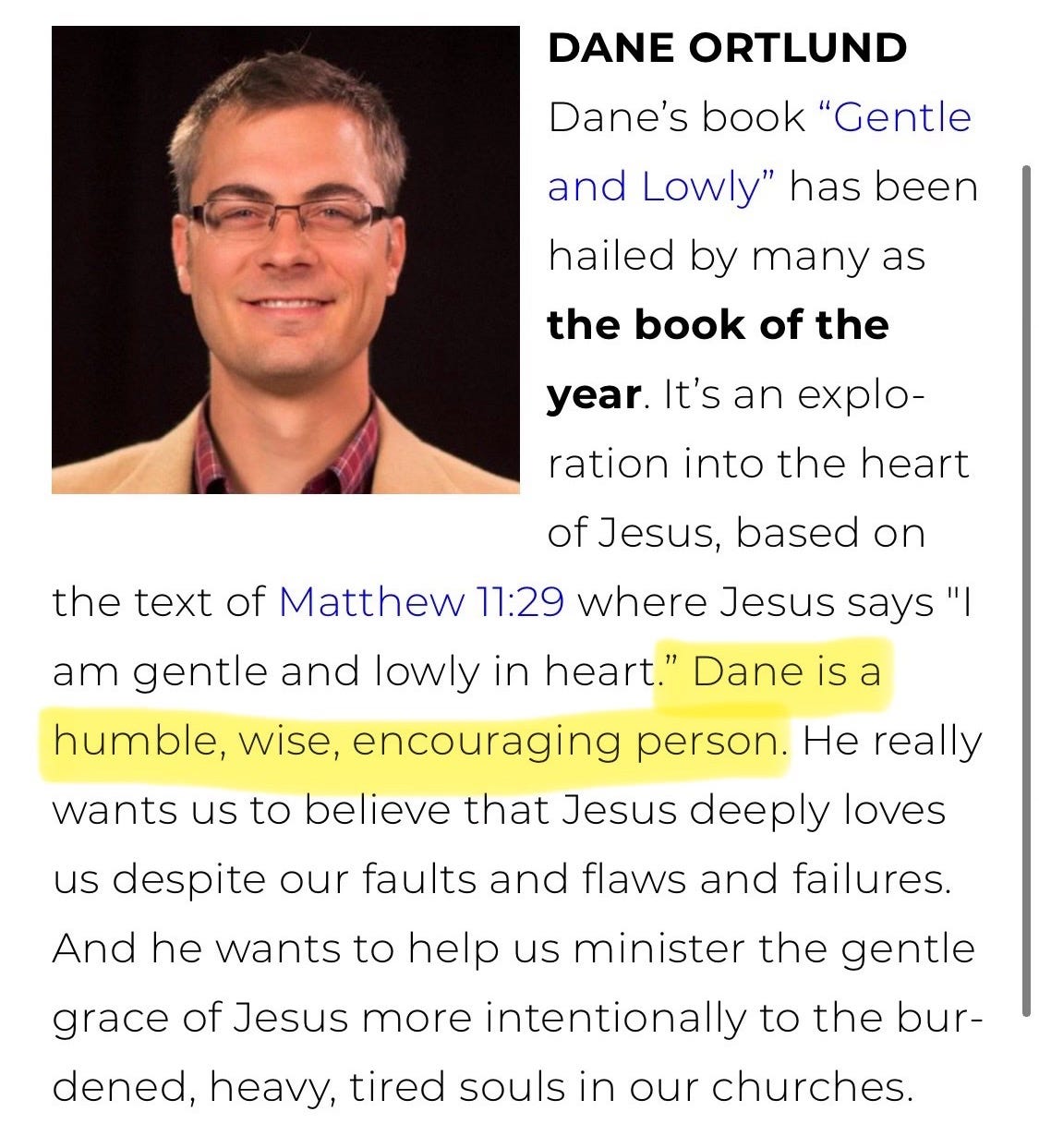
What better way than to write a book called Gentle and Lowly: The Heart of Jesus for Sinners and Sufferers?
Tie the words of humility and kindness to your name and you begin to float—carried up, up, and away from scrutiny. Completely untouched by the wreckage you cause. Mistakes, misdeeds, even malice trail behind like debris no one is willing to lay at the feet of Mr. Gentle and Lowly.
And in that shelter, so much can pass unexamined.
I’ve considered changing my handle to “Victorious Snowflake” because, absurdly enough, it captures the full range of how people read my story.
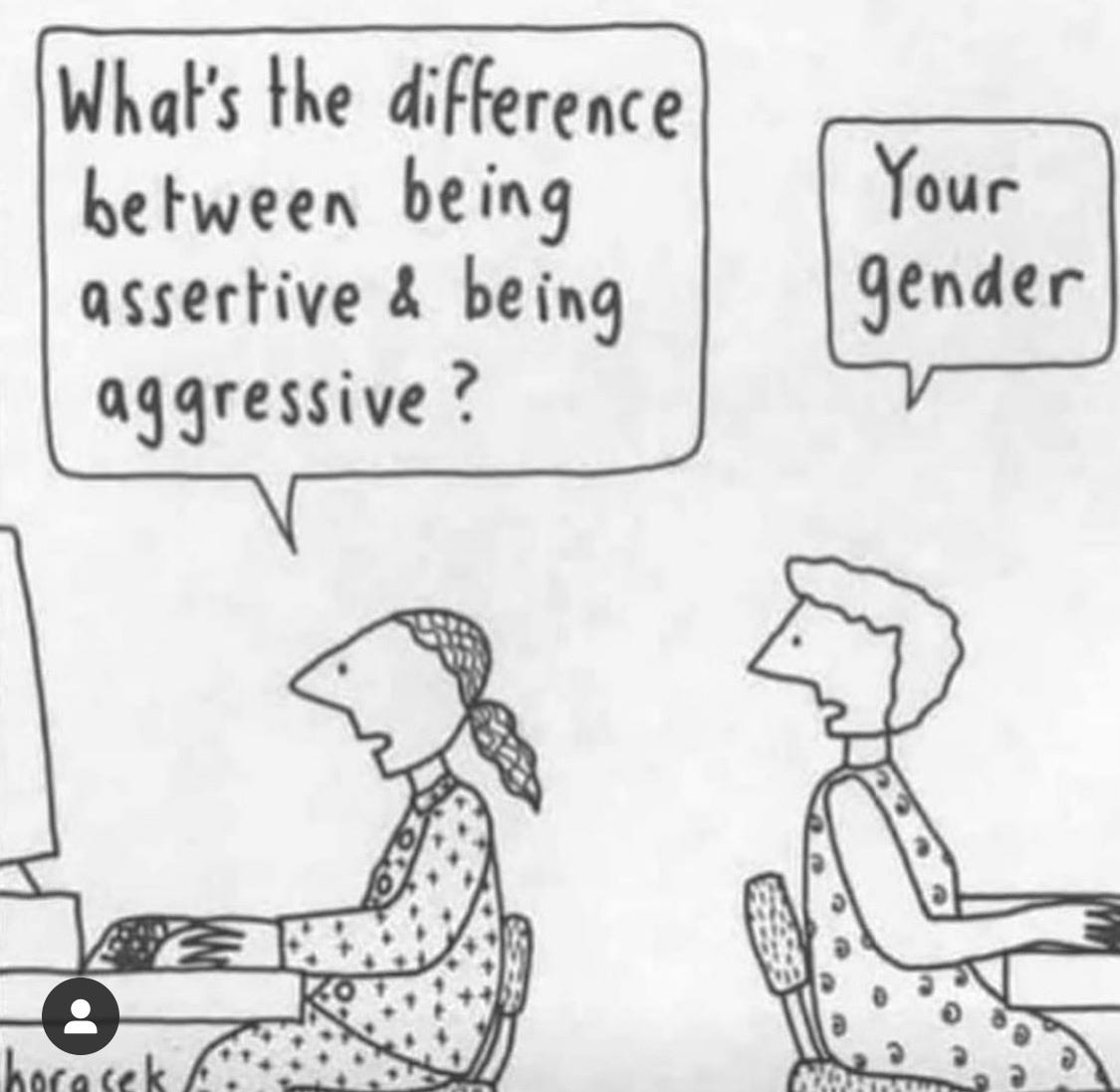
To some, I am the woman who spent years pushing for accountability within professional Christianity: determined, persistent, unwilling to be intimidated into silence. To others, I am simply a brittle employee who could not tolerate hearing unpleasant-but-true criticisms of her performance and transformed ordinary workplace conflict into claims of gender-based bullying.
The contrast is revealing.
The very same traits people praise in one context—tenacity, conviction, refusal to yield—become, in another telling, abrasiveness, pettiness, instability, ego. Perseverance and obstinacy are often separated less by conduct than by who is narrating the story.
Do I care? Not especially.
I have never needed to be adored in order to continue forward, nor have I required others to minimize my flaws to justify my actions.
Early in all of this, I took seriously something Mike Erre once said: The Gospel invites us to faithfulness; effectiveness belongs to God.
That idea stayed with me because, long before my termination, I could already feel the moral pressure that my church placed on people to remain quiet for the sake of peace. Around that same period, I had begun reading books on courage and ethical responsibility—particularly the obligation to actively resist tyrannical leadership rather than simply accommodate it. The Gulag Archipelago became my favorite book.
Again and again, I encountered the same uncomfortable truth: silence is often rewarded long before it is regretted.
The day before I was fired I highlighted two passages from The Courage to Stand by Russell Moore and took pictures because they meant so much.
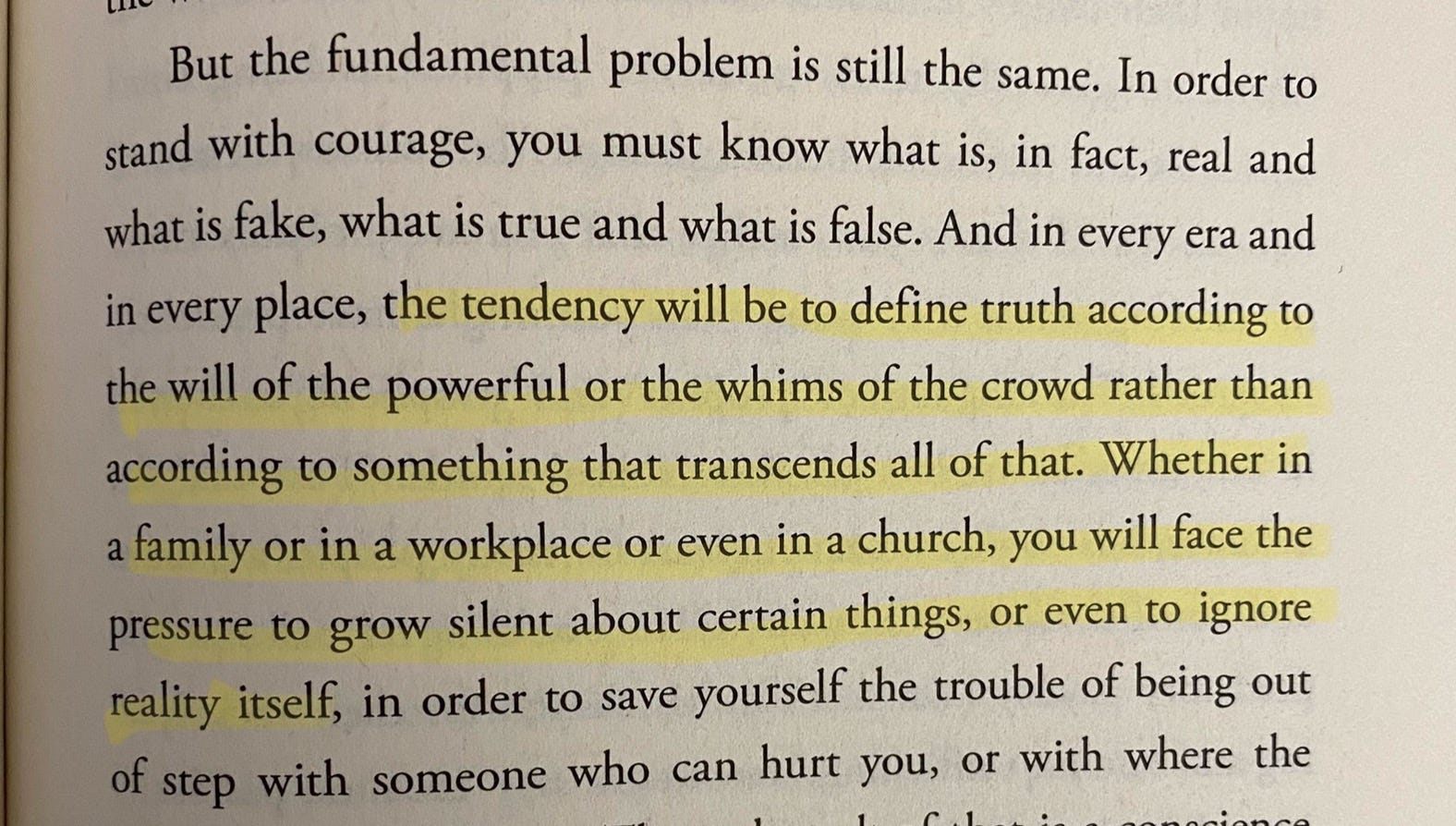
“In order to stand with courage, you must know what is, in fact, real and what is fake, what is true and what is false. And in every era and in every place, the tendency will be to define truth according to the will of the powerful or the whim of the crowd rather than according to something that transcends all of that. Whether in a family or in a workplace or even in a church, you will face the pressure to grow silent about certain things, or even to ignore reality itself, in order to save yourself the trouble of being out of step with someone who can hurt you.”
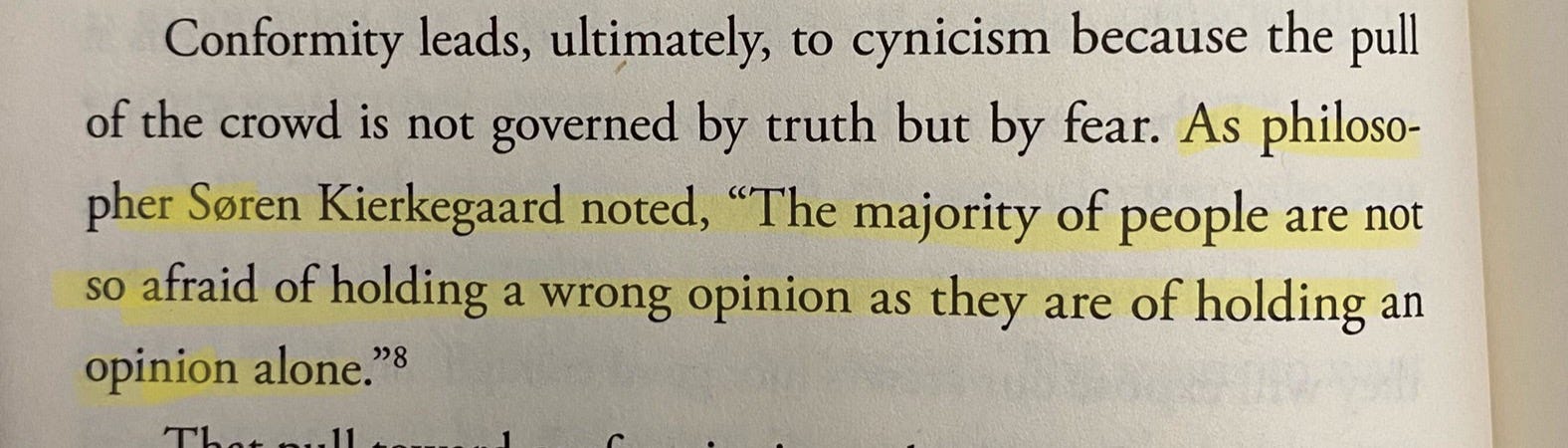
“The majority of people are not so afraid of holding a wrong opinion as they are of holding an opinion alone.”
Readers might recognize that I wrote this quote on a post-it and had it on my computer throughout the trial in 2024.
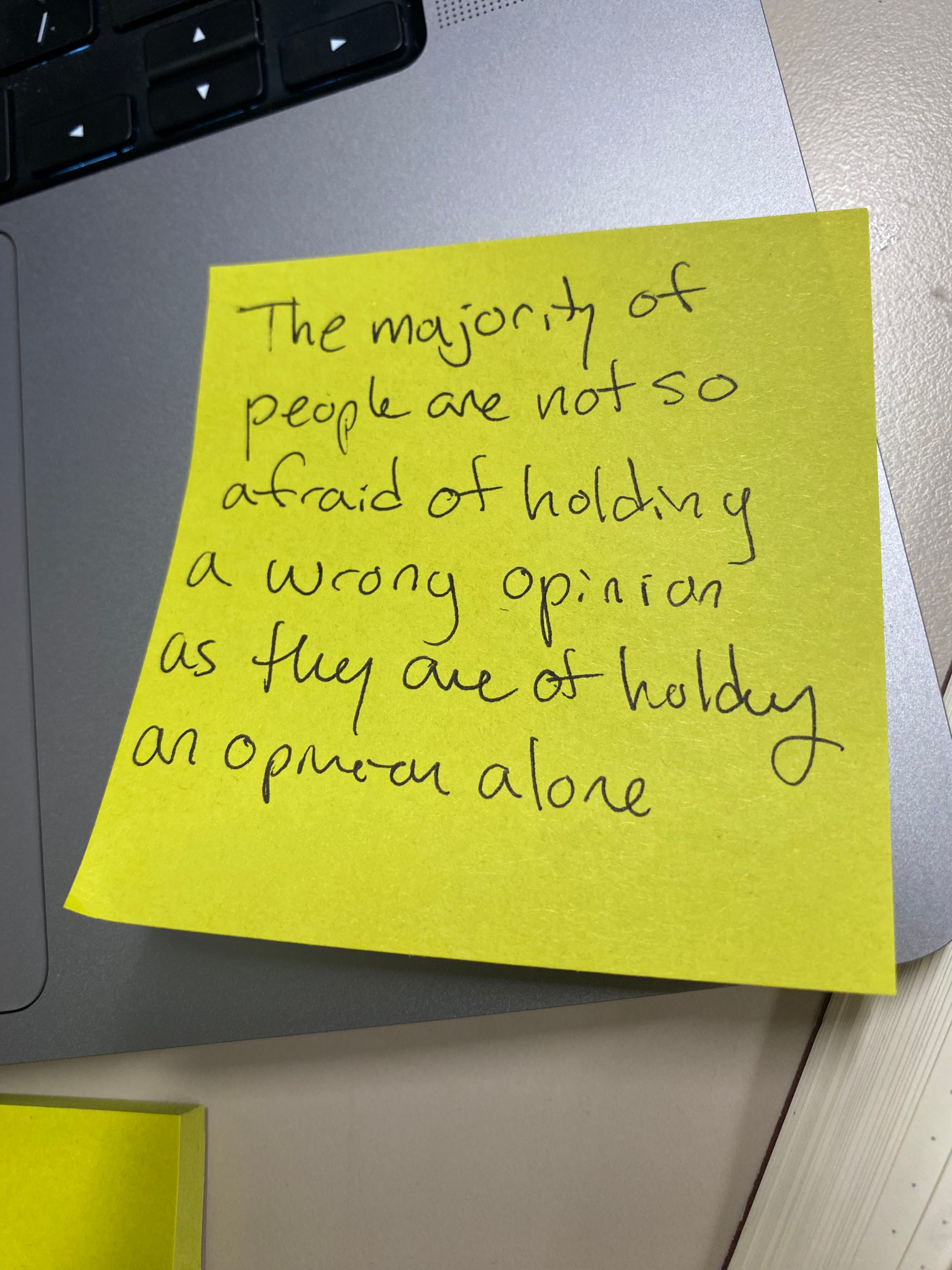
There were moments when a rational assessment of personal risk would have told me to sit down, lower my eyes, and preserve myself. It would have been easier to pander and diminish. Socially safer. But once you believe something wrong is happening, the act of remaining silent begins to exact its own price.
So I stayed standing.
Not because I believe myself uniquely courageous or virtuous. Providence deals people very different hands. Even a strong hand can become difficult to play when the costs accumulate from every direction—financially, emotionally, socially, spiritually.
I simply believe I was dealt a particular set of circumstances and I tried to play them faithfully.
What I did not do was construct a carefully curated public image designed to float above accountability.
Articles about my case:
https://roysreport.com/investigation-finds-author-pastor-dane-ortlund-likely-retaliated-against-church-employee-for-bullying-complaint/
https://roysreport.com/illinois-judge-finds-pastor-and-author-dane-ortlund-fired-operations-director-in-retaliation-for-discrimination-complaint/
https://religionnews.com/2026/05/05/pca-church-retaliated-against-female-director-illinois-judge-rules-dane-ortlund/
https://thewartburgwatch.com/2022/12/14/will-the-real-dane-ortlund-stand-up-is-he-gentle-and-lowly-or-authoritarian-and-pastorcentric/
https://thewartburgwatch.com/tww2/2026/05/06/emily-hyland-wins-her-case-against-dane-ortlund-and-his-elders-proving-once-again-that-churches-are-subject-to-the-laws-of-the-us/
I’m so proud of you Victorious Snowflake! It’s been a difficult five years but you prevailed. I’ve loved reading your posts and finally created my own account so that I don’t have to mooch off yours. I also get to comment!
I LOVE THIS!!! I love YOU, Emily. You're on my list of heroines. Thank you for standing and exposing what so many women experience every day and it's just so wrong. You won't know until you get to Heaven how much good you did.